
If you experience slow drains, clogs, or backups, it may be time to schedule drain cleaning services in Los Angeles. Drain snaking and hydro jetting can clear buildup and blockages, but the right method depends on several factors. Learn the differences between hydro jetting versus drain snaking and how Oscar’s Plumbing & Rooter in Los Angeles can help.
Key Takeaways
- Hydro jetting versus snaking: Both eliminate clogs, but each has different advantages depending on the situation.
- Drain snaking uses a flexible cable to either retrieve or break up debris inside lines.
- Hydro jetting services use high-pressure water to blast away blockages and clean buildup from inside pipes.
- The best method depends on the clog’s source, as well as your drain and sewer line’s materials, condition, and age.
Drain Snaking vs. Hydro Jetting: What’s the Difference?
Hydro jetting and drain snaking both address clogs and buildup, but each drain-clearing method works differently.
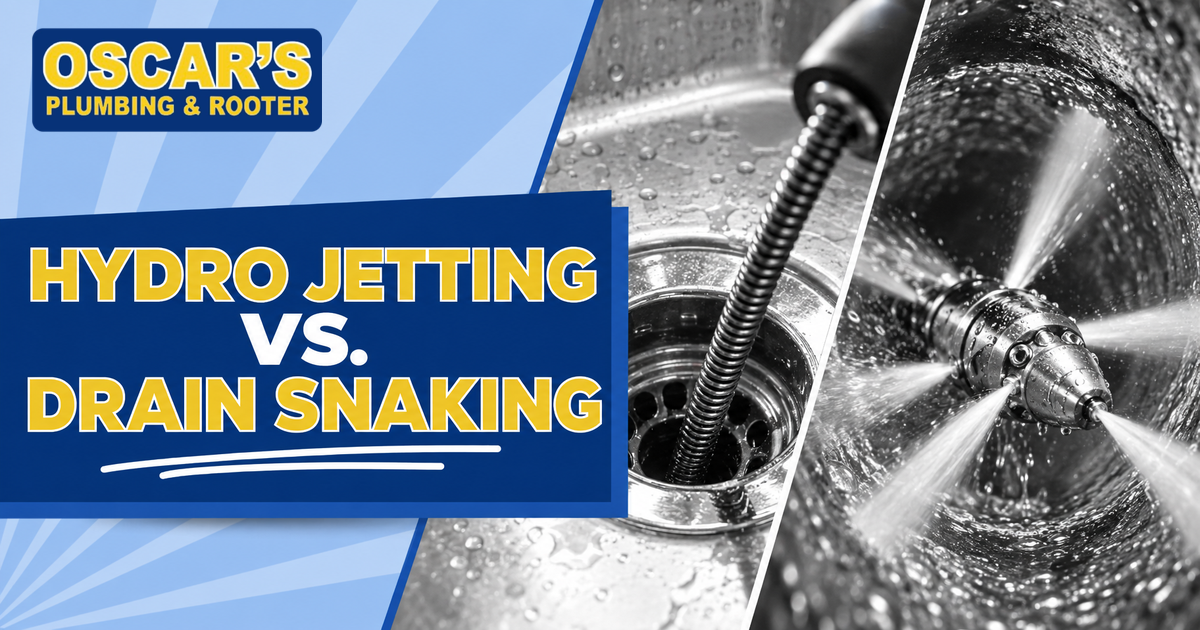
What is drain snaking?
Drain snaking refers to using a coiled cable to clear blockages from drains and sewer lines. Named for its snake-like presentation and movement, this long, flexible cable feeds into drains and pipes as it uncoils. With this rotation, the plumber uses the cable to break up clogs or hook and remove debris as they rewind the snake and pull it out.
Drain snaking can use different heads, such as blades or hooks, depending on the clog. Plumbers may use handheld drain snakes for localized clogs within about 25 feet, such as in sinks, tubs, and toilets. For tougher or deeper blockages, plumbers may use motorized drain snakes or augers.
What is hydro jetting?
Hydro jetting uses high-pressure water, usually ranging from 1,500 to 4,000 PSI, to clear clogs and buildup inside pipes. Plumbers use specialized hydro jetting equipment, which includes a motor, water tank, high-pressure pump, hose, and multi-directional nozzle.
After completing a camera inspection and verifying that your pipes are in good condition, plumbers feed the hose and nozzle into the system through an access pipe or cleanout. The nozzle sprays in multiple directions, both dislodging stubborn blockages and scouring grease, biofilm, scale, and other debris built up on the interior pipe walls.
When Is Drain Snaking the Right Choice?
Drain snaking addresses immediate issues, and it’s usually the right choice for:
- Localized blockages: Snaking is ideal for a single blockage in a localized drain or secondary branch and can clear debris quickly with minimal disruption.
- Fragile or aging pipes: Plumbers can use a drain snake with greater precision and specialized heads to prevent further damage or leaks in aging pipes.
- Quick fixes: Drain snaking is often faster and more budget-friendly plumbing repair for simple clogs.
Snaking may not be effective for blockages caused by heavy buildup throughout the system. It may clear some debris, but the pipe may still have restricted flow and is more likely to clog again soon. If your drains need snaking repeatedly, they may need another solution.
When Is Hydro Jetting the Better Option?
While drain snaking has specific advantages, hydro jetting for clogged drains is a versatile and often better option in certain scenarios:
- Persistent clogs and slow drains: Recurring drain clogs or slow-draining water across multiple fixtures indicates a problem deeper in the line.
- Tree root intrusion: High-PSI jet streams can cut through and wash away tree roots that have invaded your underground sewer lines.
- Widespread buildup: Hydro jetting can thoroughly scour away the grease, mineral scale from hard water, soap scum, and other buildup coating the inside of pipes across your system.
- Routine preventative maintenance: Scheduling periodic hydro jetting is an effective strategy to eliminate buildup, avoid sewer line clogs and backups, and protect your pipes.
Is Hydro Jetting Safe for Older Pipes?
As long as they’re in good condition, hydro jetting is safe for most older pipes. Before hydro jetting your drain and sewer lines, your plumber completes a sewer camera inspection. They thoroughly inspect the system for major cracks, corrosion, collapsed sections, or other damage, and they factor in the potential fragility of older clay, cast iron, or orangeburg pipes.
If necessary, your plumber can adjust the PSI to account for weaker sections. In cases with significant damage, your plumber may recommend an alternative solution to hydrojetting, such as snaking or sewer line repair.
How Professionals Choose the Right Drain Cleaning Method
Professionals tailor drain cleaning or clearing methods to the specific situation, using camera inspections and other diagnostic strategies to evaluate your system and its needs. To choose between plumbing snakes versus hydro jetting, they consider factors such as:
- Clog severity: Hydrojetting is a thorough method for dealing with widespread buildup, tough blockages, or preventative maintenance, while snaking is more practical for localized clogs or slow drains.
- Location: Drain snakes can navigate tight bends and narrow pipe sections near fixtures. Either motorized augers, hydro jetting, or a combination may be appropriate for buildup in the main sewer line.
- Obstruction type: Drain snakes can retrieve foreign objects, clumps of hair, or pieces of food, but they only punch temporary holes through grease. Hydro jetting scours and flushes out grease and sludge completely.
- Pipe condition: Plumbers consider the material, age, and overall condition of your pipes as well as the likelihood of future clogs.
Frequently Asked Questions
Why is a camera inspection helpful before hydro jetting?
A camera inspection is helpful before hydro jetting because it checks the condition and structural integrity of your pipes before applying high-pressure water. Hydro jetting is safe for most systems, but high-PSI jets can damage or collapse severely compromised pipes.
Why is the clog worse after snaking the drain?
If the clog is worse after snaking the drain yourself, you may have pushed the debris deeper and compacted it into a tougher blockage. Clogs can become worse if they’re trapped in narrower sections or pipe bends.
What shouldn't you do when you have a clogged drain?
To prevent damage or hazards, avoid a few things when you have a clogged drain. Stop running the water, and don’t use harsh chemical cleaners, force a drain snake, or pour boiling water into the drain.
Schedule Professional Drain Cleaning With Oscar’s Plumbing & Rooter
Need help with a stubborn or recurring drain clog? Contact Oscar’s Plumbing & Rooter today to schedule professional drain cleaning service.
Where We Serve
Oscar’s is north LA’s most reliable plumbing, Drains & water heater company
- Altadena
- Beverly Hills
- Burbank
- Calabasas
- Caltech
- Echo Park
- Encino
- Glendale
- Hollywood
- Hollywood Hills
- Pasadena
- San Fernando Valley
- Sherman Oaks
- Van Nuys
- West Hills
- West Hollywood
- Woodland Hills
- And More!
